

China's economy poised for Q1 rebound but Iran war jolts 2026 outlook

People work at a shoe shop in a wholesale clothing market in Guangzhou, Guangdong province, China on April 15.
PHOTO: Reuters

BEIJING — China's economy likely picked up speed early in 2026 on strong exports and policy support, but the momentum is fraying as the Middle East conflict pushes up energy costs, cools global demand and threatens to squeeze already-thin corporate margins.
The Iran war has exposed a key fault line: as the world's biggest energy importer and a heavily export-reliant economy, China is vulnerable to an oil shock already slowing trade, lifting factory costs and darkening the outlook for the year.
Data due out Thursday (April 16) is expected to show gross domestic product grew 4.8 per cent in January-March from a year earlier, quickening from a three-year low of 4.5 per cent in the October-December quarter, according to a Reuters poll.
GDP growth is expected to slow to 4.7 per cent in the second quarter, dragging the full-year expansion to 4.6 per cent in 2026 from last year's five per cent, the poll showed, broadly in line with the official target of 4.5 per cent-five per cent.
"China's exports remain a key growth engine in 2026, but the recent energy shock has shifted the focus toward the sustainability of external demand," Xinquan Chen, China economist at Goldman Sachs, said in a note.
"While China's production is relatively resilient, its key trading partners — particularly lower-income emerging-market economies that account for nearly 40 per cent of exports — are increasingly exposed to stagflation risks."
Goldman Sachs is tipping first-quarter GDP growth at 4.7 per cent.
China's exports grew just 2.5 per cent in March year-on-year, slowing sharply from 21.8 per cent in January-February as the conflict drove up energy and transportation costs and weighed on global demand, though analysts cautioned the figure was also distorted by seasonal factors.
For the January-March period, exports still rose 14.7 per cent from a year earlier, well above the full-year growth of 5.5 per cent in 2025.
Citi analysts maintained their forecast of five per cent GDP growth for the first quarter, citing the solid export performance.
"That said, we are increasingly attentive to secondary demand effects should the conflict persist," they said in a note.
Early signs of strain are emerging.
China's factory‑gate prices rose in March for the first time in more than three years, signalling that energy-driven cost pressures are seeping into the world's second-biggest economy and threatening already-thin corporate margins.
On a quarterly basis, the economy is forecast to expand 1.3 per cent in January-March, compared with 1.2 per cent growth in October-December, the poll showed.
The government is due to release first quarter GDP figures, along with March activity data, at 2am GMT (10am SGT) on Thursday.
The March numbers are expected to show weakening consumption and factory output, partly offset by firmer investment.
Retail sales, a key gauge of consumption, are forecast to grow 2.3 per cent in March year-on-year, down from 2.8 per cent in January-February.
Factory output growth is expected to slow to 5.5 per cent in March, from 6.3 per cent in the first two months.
Growth of fixed-asset investment is forecast to edge up to 1.9 per cent in the first quarter from 1.8 per cent in January-February — when infrastructure investment jumped 11.4 per cent year-on-year.
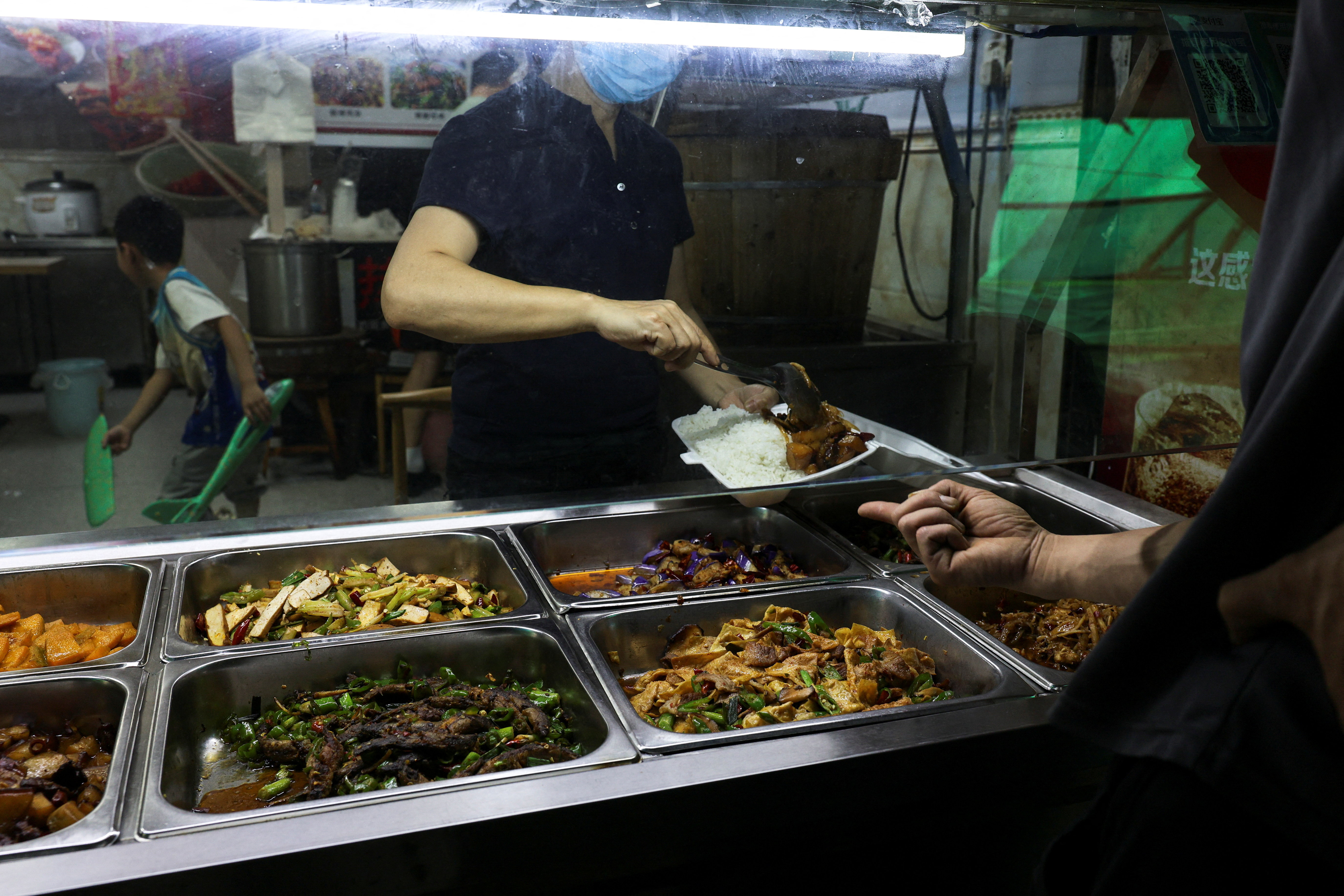
China has pledged to step up spending on major infrastructure and public services to help meet the 2026 growth target, the first year of the new five-year plan.
Fiscal expenditure rose 3.6 per cent in January-February, picking up from a one per cent increase in 2025 and adding to signs of stronger fiscal support.
Beijing has set a budget deficit of around four per cent of GDP for 2026 and lined up heavy bond issuance to support growth, while the central bank has pledged to keep policy accommodative despite limited room to cut rates as inflation edges higher.
China's Politburo, a top decision-making body of the ruling Communist Party, is expected to meet later this month to assess the economic outlook.
Policymakers have acknowledged an "acute" imbalance between strong supply and weak demand, and have vowed to "significantly" lift household consumption's share of the economy over the next five years, though no specific target has been set.
Analysts polled by Reuters expect the central bank to keep the benchmark one-year loan prime rate unchanged through the end of 2026, while cutting banks' weighted-average reserve requirement ratio by 20 basis points in the third quarter of the year.
[[nid:733693]]